
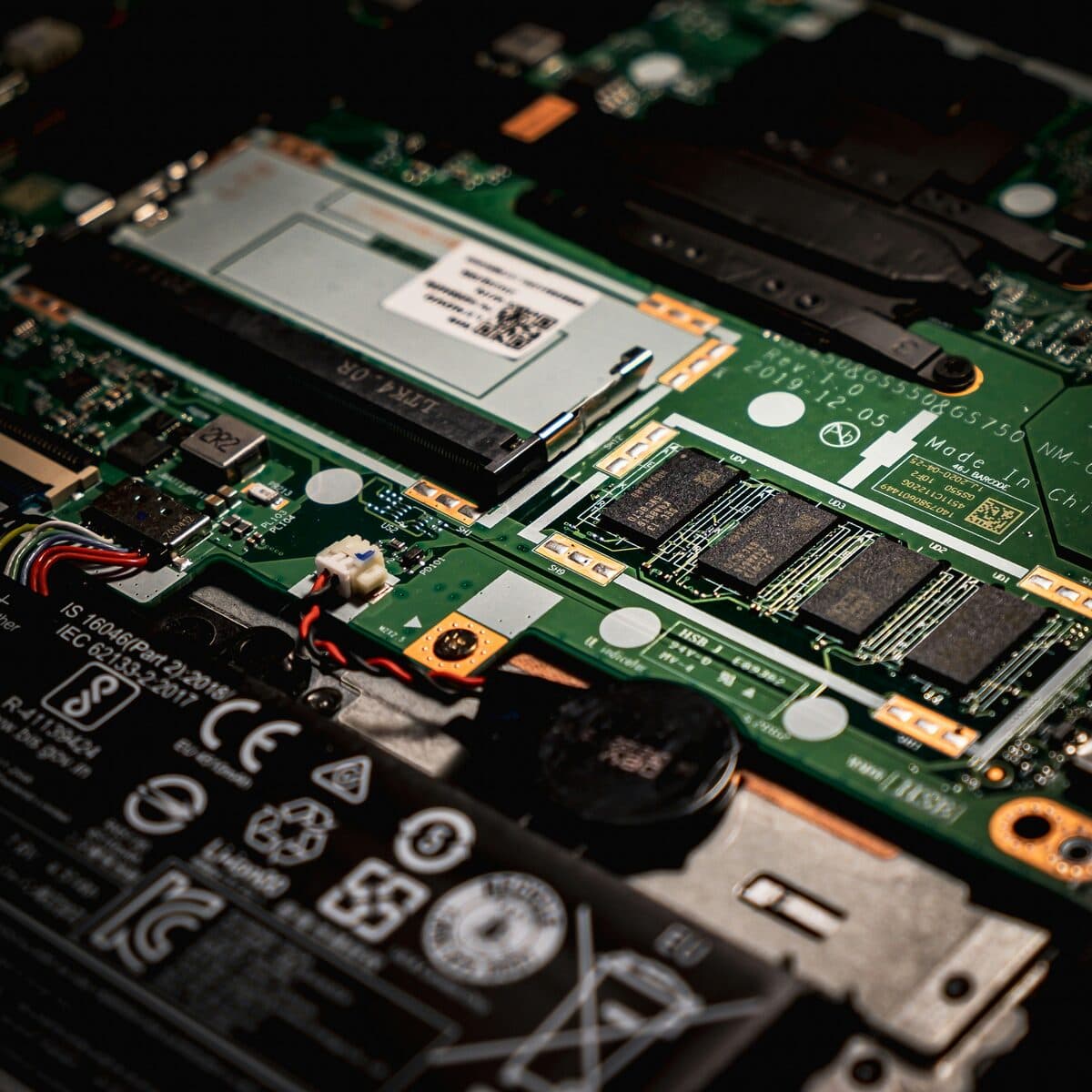
DIMM vs SODIMM: understanding the key differences
RAM plays a central role in system performance. Two memory module formats dominate the market: DIMM and SODIMM. They fulfill the same basic function, but have significant differences that affect how they're used across different devices.
Physical differences
Key dimension comparison:
- DIMM — about 133.35mm long
- SODIMM — about 67.6mm long
SODIMM is significantly more compact — nearly half the size of its DIMM counterpart. DIMM also has more pins than SODIMM, which influences capacity and performance.
Applications and specific uses
- DIMM — used primarily in desktop computers and servers, where space isn't a major constraint
- SODIMM — designed for compact devices such as laptops, mini-PCs and all-in-ones, where space optimization is crucial
Performance and capabilities
DIMM generally offers higher memory capacity thanks to its larger size and higher chip count. It retains a slight edge for overclocking due to its higher pin count. Modern SODIMM can nonetheless deliver comparable performance to DIMM in many use cases — the performance gap has narrowed significantly with technological advances.
Compatibility and interchangeability
DIMM and SODIMM are not interchangeable, due to their physical differences and distinct connectors. A DIMM module cannot be used in a slot designed for SODIMM. SODIMM-to-DIMM adapters do exist, though, offering some flexibility for repurposing laptop memory in a desktop computer.
Technology evolution and future trends
Memory technology has evolved across several generations — DDR, DDR2, DDR3, DDR4 — each improving speed, power consumption and capacity. This progression applies to both formats, progressively narrowing their performance gap. Future convergence between DIMM and SODIMM performance is expected, driven by demand for powerful portable devices in compact form factors.
Conclusion
The choice between DIMM and SODIMM depends mainly on device type and space constraints, more than on raw performance. Both formats will keep coexisting, each adapting to the specific needs of different types of computers and electronic devices.